Blog

Strategic Response to Sourcing Challenges Amidst Tariff Instability

Dear Valuable Customers!

VN-Sourcing. We are here in Vietnam to address the current challenges of impact of tariff in the global supply chain now and looking forward to collaborating with you.

Impact of Tariff Instability 

The recent imposition of tariff on Chinese imports has introduced substantial volatility into global supply chains. This dramatic increase in costs has forced many businesses to reevaluate their reliance on Chinese manufacturing, leading to disruptions in inventory and pricing strategies. 

Adoption of the “China Plus One” Strategy

In response to these challenges, many companies are adopting the “China Plus One” strategy. This approach involves maintaining a primary manufacturing base in China while establishing an additional sourcing location in a different country to mitigate risks associated with over-reliance on a single source. Countries such as Vietnam, India, and Mexico are emerging as viable alternatives due to their competitive labor costs and favorable trade agreements.

Benefits of Diversified Sourcing

Implementing a diversified sourcing strategy offers several advantages:

1.Risk Mitigation: Reduces exposure to geopolitical tensions and trade policy changes. 2.Cost Optimization: Access to more competitive labor costs and potential tariff advantages. 3.Supply Chain Resilience: Enhanced flexibility and agility in responding to market fluctuations.

Strategic Recommendations

To navigate the current sourcing landscape effectively, We recommend the following actions:

1. Assess Current Sourcing Dependencies: Evaluate the proportion of products sourced from China and identify critical supply chain vulnerabilities.

2. Explore Alternative Sourcing Locations: Investigate potential suppliers in countries with favorable trade terms and stable political environments.

3. Strengthen Supplier Relationships: Develop long-term partnerships with suppliers in diversified regions to ensure reliability and quality.

4. Implement Agile Supply Chain Practices: Enhance supply chain visibility and flexibility to adapt to rapid changes in the global market.

    Conclusion

    The current tariff-induced instability presents both challenges and opportunities. By proactively adopting a diversified sourcing strategy, we can mitigate risks and position our supply chain for long-term resilience and competitiveness.

    We look forward to discussing these strategies further and collaborating on the best path forward.

    VN-Sourcing: https://vn-sourcing.com/
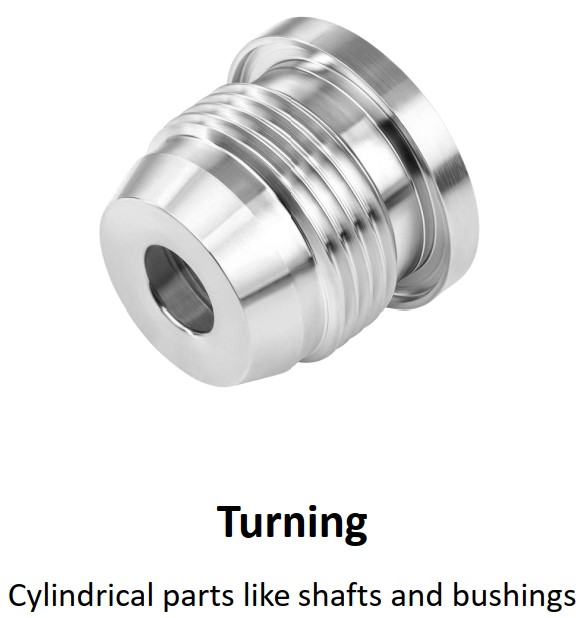
    CNC Machining in Vietnam 2025

    What is CNC Machining?

    CNC Machining is like a robot sculptor. You give it a digital design — it cuts, drills, and shapes metal or plastic into real parts. Fast. Precise. No mistakes

    Vietnam’s CNC Machining History
    Vietnam’s CNC industry began scaling around 2005-2010, first serving Japanese and Korean giants like Honda, Yamaha, Canon, Samsung, LG

    Today, most CNC factories in Vietnam have 8–15 years’ experience, founded by engineers trained in foreign-owned companies

    Why Vietnam?
    Top-performing CNC factories in Vietnam expect 30–70% annual growth in revenue.
    CNC Machining in Vietnam 2025 | Page 04
    1. Low Labor Cost
    • Avg. CNC operator salary: $350–450/month
    • 50% lower than China, up to 90% lower than USA/EU
    2. Low Electricity Cost: Vietnam: $0.08–0.09/kWh vs China: $0.12–0.14/kWh
    3. Engineering Talents
    • 40,000+ engineering graduates/year (mechanical, electrical)
    • Many factory owners trained at Honda, LG, Yamaha, Canon with 10-20 years of experience
    4. Strategic Location
    • Trade agreements: CPTPP, RCEP, EVFTA → Reduced or 0% duty to key markets
    • Major ports: Hai Phong, Da Nang, Cat Lai (handling 4.9M+ TEUs/year)
    • Sea freight lead time: 22-35 days to U.S and 25–40 days to Northern Europe

    Source: Bconduct.,Ltd

    IQC & SA

    Incoming Quality Control and Supplier Audits in Manufacturing

    Supplier Audits
    Supplier audits are formal assessments of a supplier’s quality management system, processes, and capabilities to ensure they meet the buyer’s expectations and standards.
    Assess Supplier Capability: Audits verify a supplier’s ability to consistently produce high-quality materials.
    Identify Potential Risks: Audits uncover potential risks and areas for improvement in the supplier’s processes.
    Improve Supplier Performance: Audits provide feedback and guidance to suppliers, encouraging continuous improvement in their quality systems
    Types of Supplier Audits:
    First-Party Audit: Conducted by the supplier itself to assess its own compliance with its quality management system.
    Second-Party Audit: Conducted by the buyer (manufacturer) to evaluate the supplier’s capabilities and compliance with the buyer’s requirements.
    Third-Party Audit: Conducted by an independent certification body to assess the supplier’s compliance with industry standards or regulations.
    Key Areas of Focus:
    QMS: Documentation, policies, procedures, and implementation
    Production Processes: Manufacturing methods, process controls, and equipment calibration.
    Quality Records: Inspection data, non-conformance reports, corrective actions, and supplier performance metrics.

    Incoming-Quality-Control IQC is a systematic process of inspecting and verifying incoming materials against pre-defined specifications and quality standards. It acts as a first line of defense against defects and non-conformities.
    IQC help to
    Prevent Defective Products: Catches potential issues early, preventing the use of substandard materials in production, thus avoiding costly rework or scrap.
    Maintain Quality Consistency: Ensures that incoming materials meet the required standards, contributing to consistent product quality.
    Supplier Performance Monitoring: Data provides valuable insights into supplier performance, helping identify potential problems and improve supplier relationships.
    Key Activities:
    Inspection: Visual inspection, dimensional measurement, material testing (chemical composition, physical properties), etc.
    Documentation: Recording inspection results, deviations, and corrective actions taken.
    Acceptance & Rejection: Deciding whether the material meets the acceptance criteria and authorizing its release to production or rejecting it.

      Benefit IQC & Supplier Audit

      Helps Identify Cost-Saving OpportunitiesEnhances Supply Chain Transparency
      Improves Product Quality,Improves Supplier Relations
      Reduces Risk of Product RecallsMitigates Supply Chain Risks

      Alex T